

Krishna_goyal
“India is a country in which every great religion finds a home.”
India’s diversified mix of religions, historical monuments, and tourism begs the challenge of how to unify a country with such complex links. This essay investigates how historical issues such as secularism and minority rights, as well as how we present our heritage, shape India’s national identity and political landscape. It will look to thinkers such as Tagore and Arendt to understand the problems and approaches to forming a cohesive Indian country.
Secularism and Unity:
India’s rich history and diverse legacy, while fundamentally indivisible, present a challenge to nationalist theories. Scholars such as Amartya Sen and Tagore emphasise the need of balancing India’s unity and variety, emphasising the need for concerted efforts to maintain stability. Arendt’s theories on nation-states and minorities suggest that managing diversity may require means other than secularism. The development of sectarian nationalism under Indira Gandhi’s leadership, resulted in sectarian violence and secessionist movements. These events paved the way for the formation of right-wing Hindu politics and the rise of the Bharatiya Janata Party. The quest of a secular state may not completely appreciate the fundamental dynamics defining the nation after independence. Arendt’s concept of stateless conditions for minorities indicates a more sophisticated strategy that involves “dragging and pushing” segments of the community to keep unity. There are repercussions of abandoning secular governance, raising worries about the impact on stability and national integrity.
Heritage and Nation-Building:
Heritage plays an important part in establishing India’s identity, chronicling its historical progression from ancient civilizations to colonialism. The junction of heritage and nationalist narratives is investigated, with a focus on how post-independence archaeology, led by the Archaeological Survey of India (ASI) and university departments, contributed to a comprehensive understanding of India’s varied history. However, narrow nationalist ambitions have resulted in selective measures that aim to homogenise Indian culture while marginalising certain communities.
The Ayodhya case stands out as a prime example of nationalist heritage destruction. The events surrounding the Babri Masjid highlight the use of history for political purposes, which adds to communal tensions. The Ram Janmabhumi campaign, which is supported by the VHP, RSS, and BJP, exemplifies the politicisation of heritage for larger political purposes.
Religion often serves as a enduring identity, resisting change and relying on social movements, institutions, and political economy. In India, religion significantly influences identity, politics, and national perception. The country’s heritage, influenced by Hinduism, Buddhism, Jainism, Sikhism, Islam, and Christianity, reflects its cultural history and architectural magnificence. Religion influences daily activities, education, and politics, but also contributes to ethnic strife over national identity.
India’s Architectural Treasures:
India has a plethora of architectural marvels that reflect its unique cultural history. These constructions not only attract international tourists, but also contribute considerably to India’s tourism industry, creating jobs for many people.
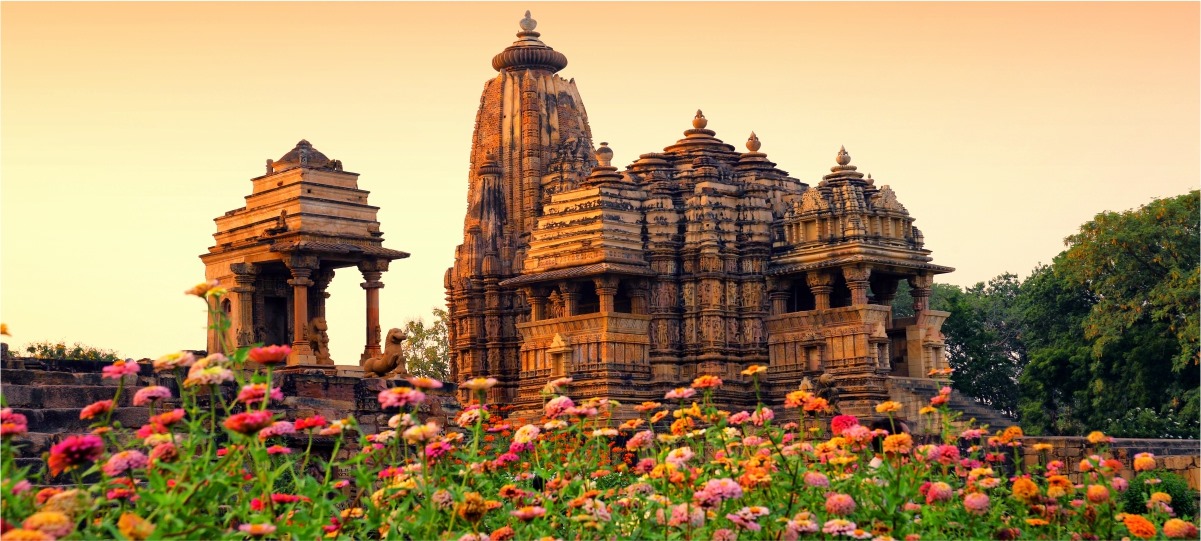
Among the most famous are the Ajanta and Ellora Caves, which have finely carved sculptures and murals reflecting old Indian religions and mythology. Khajuraho’s temples, renowned for their intricate carvings and sensual statues, are prime examples of mediaeval architecture. Hampi, formerly the booming capital of the Vijayanagara Empire, provides a look into a bygone age through the ruins of palaces, temples, and bazaars.
India’s architectural landscape features iconic structures like the Taj Mahal and the Red Fort, as well as historical sites like Qutub Minar and Fatehpur Sikri. The country’s heritage extends beyond ancient buildings to UNESCO World Heritage Sites like the Sun Temple in Orissa and Chola Temples. Natural beauty like Kaziranga National Park and Manas Wildlife Sanctuary are also noteworthy. The religious heritage of India is exemplified by the diverse churches and convents in Goa.
These architectural marvels provide crucial linkages to India’s past, reminding future generations of the country’s cultural legacy and artistic talent. Preserving these assets is a shared obligation, not only for their historical significance, but also for the representation of cultural identity and economic opportunities they provide.
Enriched by Words:
India’s wide and dynamic literary heritage is distinguished by its numerous themes, which range from mythology and heavenly narratives to a complex tapestry focused on human development and societal advancement. This literary landscape is largely divided between Sanskrit and Sangam literature, both known for their profound insight and enduring beauty.
Sanskrit literature spans millennia and includes epics, poetry, drama, and philosophical treatises. The gigantic Mahabharata and Ramayana epics deal with themes of duty, righteousness, and love, but Kalidasa’s poetry and plays explore complex emotions and human relationships.
Sangam literature, which originated in Tamil Nadu, has a distinct voice and is internationally acclaimed for its wit and wisdom. These poems, which cover a wide range of topics including as love, nature, and social commentary, provide unique insights into ancient Tamil society and remain relevant due to their ageless description of human experiences. Indian literature is more than just amusement; it serves as a repository of information, offering philosophical direction, social commentary, and profound insights on the human condition.
Tourism
Tourism is more than just a financial activity; it also serves as an ideological framework for history, nature, and culture. The rhetoric around heritage tourism becomes important in the context of contested identities that contribute to both national and international crises. The politics inherent in legacy tourism manifest as a dynamic and politically charged practice in which dominant narratives of history, culture, and identity are constantly in conflict.
There are tourist representations by various entities—namely, the Indian Government, Indian Trade, and Indian Popular Media—present the heritage of six major religions in India. The study questions seek to understand which components of religious heritage are emphasised and to investigate the variances in these representations across various sources.
Conclusion:
The relationship between heritage, religion, and tourism in India is complex and contentious. Religious heritage shapes national identity, influences political landscapes, and fuels debates. Understanding this interplay is crucial for India to handle challenges and opportunities. The historical trajectory of heritage, from secular aspirations to politicization, reflects the interaction of forces impacting the nation-state. Exploring heritage narratives provides insight into problems and potential implications for India’s future stability and unity.